The economics of place: what makes a high street work
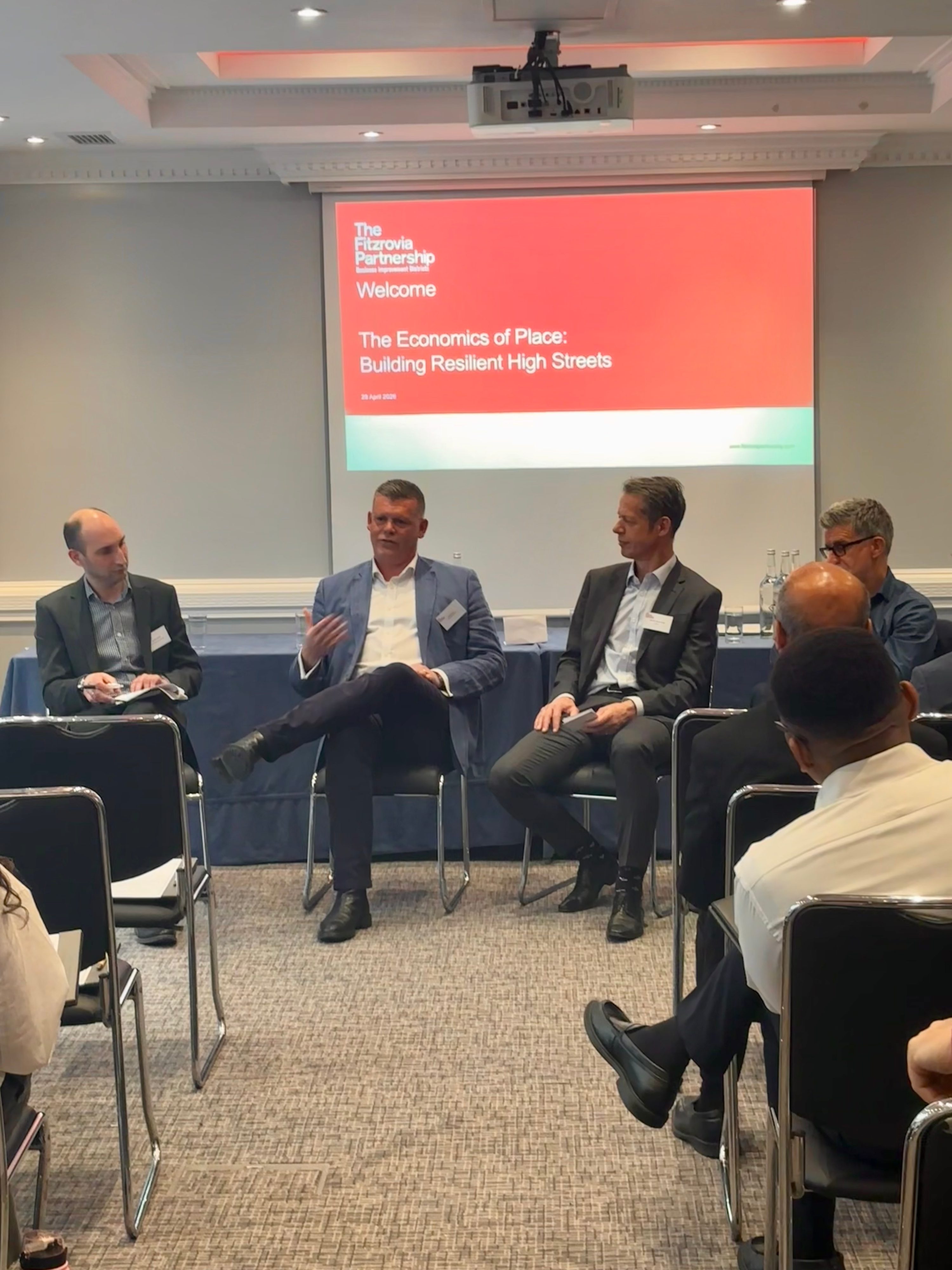
The panel
We wanted to convene a panel will different perspectives and expertise, who could share their experiences before we opened up the session to questions from our members.
Mark Serrell, Partner, Kenningham Retail
Mark has spend 15 years working on the leasing and repositioning of Tottenham Court Road. He advises landlords and has been closely involved in the transformation of the street, from its electronics dominated past, to a more diverse and resilient offer.
Hamish Mansbridge, Chief Executive, Heal's
Hamish has been at the helm of Heal's for over a decade, he's also a local resident. Heal's was founded in Fitzrovia in 1810, and has been trading in its current location on Tottenham Court Road since 1880. It is one of the most established businesses on the street and a cornerstone of Tottenham Court Road's furniture and design identity.
Andrew Carter, Centre for Cities
Centre for Cities is the UK's leading think thank on urban economies. Andrew's work focusses on what drive the performance of city and town centres, he shared national data and cross-city comparisons, drawing on analysis of the 63 largest urban areas in the UK.
A story of transformation
In 2012, the street was dominated by low-quality electronics retail, a sector already in decline as online shopping was taking hold. Poor quality shop fronts, an unwelcoming colonade on Stephen Street, a prevalence of rough sleeping, reflected a street in decline.
Investment brought about the change, according to Mark. Derwent decided to redevelop Stephen Street and changed their approach to their 1.2m sq ft holding on the road, opting for a leasing campaign designed to create a new retail identity to better serve their office occupiers, and attract new ones. Change was gradual, in no small part due to the reputation for electronics.
Today, the road has three distinct sections:
- The south, from Percy Street to Tottenham Court Road station, one of the busiest thoroughfares in the Uk with 65 million annual users since Crossrail opened, and attractions such as Outernet, Monopoly Lifesized, and the Museum of Illusions
- The middle is the furniture section, anchored by Heal's
- The north is shaped by universities and UCLH, though food and drink is also starting to take hold down here.
London Furniture Street
Building on Mark's comments, Hamish agrees that Tottenham Court Road should be the first place people think of when they are looking for furniture.
It certainly has the heritage, with two centuries of continued specialisation in furniture, upholstery, cabinet making, bedding. There's opportunity for providing visitors with a clear reason to come to Tottenham Court Road, and with all the food, drink, hotels, and retail on offer, there are many reasons to return and to spend time here.
Watch this space for how we at The Fitzrovia Partnership are developing this concept.
National context
Andrew then rounded out the conversations with reflections of the UK as a whole. Across the 63 largest urban areas in the UK, there's enormous variation in performance. Places like Bradford and Newport have vacancies of around 25%, following decades of economic underperformance, low household incomes, and competition from out of town retail. London is at the opposite end of that spectrum, with vacancy rates of around 8%, far lower than the UK average. Macro conditions have a huge impact on the performance of the high street.
Centre for Cities has identified three consistent factors that separate high-performing centres from struggling ones:
- Less reliance on retail - places performing well have a mixed offer - offices, residential, public services, and leisure
- Sustained office presence - despite everything that has been written about post-covid working patterns, maintaining commercial activity in a centre remains a significant positive for surrounding streets
- Residential density - cities like Lyon have vastly more people living within walking or cycling distance of their centres than anywhere in the UK, if there were a million more residents within easy reach of Tottenham Court Road, the street would look very different.
The barriers
The weekend gap
Like much of central London, Tottenham Court Road is predominantly a weekday destination. Office occupancy seems to be up to four days a week, from three for the years following Covid.
The challenge for us, and the businesses we look after, is how we give reasons to visit at the weekend, and to stay longer while visitors are here.
Part of the answer lies in how we position the area: Charlotte Street's afresco dining offer (which we're working to develop for Goodge Street as well), is one example of how the physical environment can be used to generate a reason to visit.
The entertainment offer at the southern end of the road serves families and leisure visitors, but connecting these pieces and extending dwell time is going to require a coordinated effort from us, landowners, and operators.
Rough sleeping
Rough sleeping and antisocial behaviour was raised by a resident in the room - TCR feels less safe at night than other areas, she said, that is a big barrier to encouraging people to come.
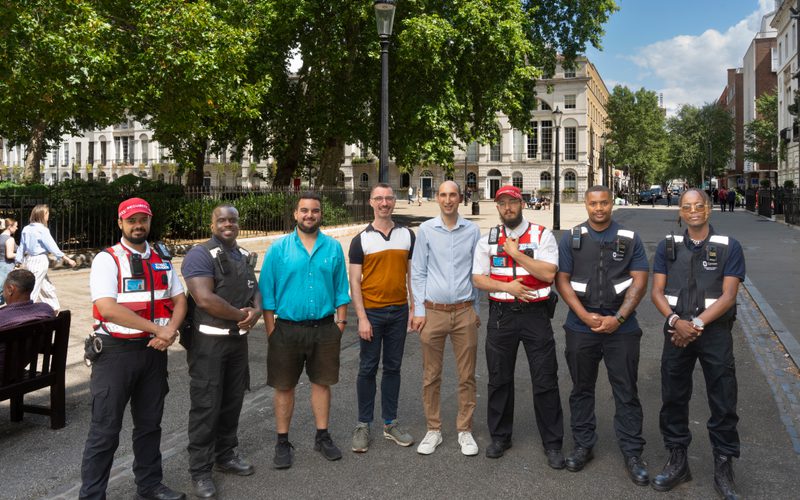
At one point, there were 31 tents on the road in the event, there is now only one. Progress is being made, through persistent engagement with Camdena nd through our street warden operation. However, the challenge on Euston Road is ongoing. It's a London-wide issue, but it's certainly a key focus of ours to tackle.
Business rates and regulatory barriers
A franchise operator raised the question of how we address the structural disadvantages facing high street businesses; business rates, planning timescles, and licensing restrictions all featured in the conversation.
Andrew's response was candid: Business rates reform is a national issue that requires a national coalition to move. London sees further complications because it looks like it is in a good place with manageable vacancies, and the national government weights London's position against places with far more acute structural decline. However, the case still needs to be made, in coordination with other BIDS, business groups, and local authorities. We have subsequently joined the Real Rates Reform campaign to do just this.
However, where occupancy costs fall through rates relief, historically, landlords have adjusted rates upwards to capture the benefit; whilst rates need to be addressed, rates alone are unlikely to transform the economics of the street.
Emerging opportunities
Life sciences and the knowledge economy
Anchored by UCLH and UCL, and complemented by a number of life sciences business, Fitzrovia has a growing life sciences cluster. This is a genuine point of difference.
Taking learnings from King' Cross, a concentration of tech, life sciences, offices, and quality public realm can create a place with sustain appeal. We are considering how events like Life Sciences Week could be used to raise the visibility of this cluster and attract further investment.
Oxford Street
Significant investment is now arriving along Oxford Street East, the closest area to Fitzrovia's southern boundary. New lettings, architecture, and improved digital signage have change the character of this end of the street, and Warner Bros and GPE are among the occupiers and developers active in the area. The pedestrianisation of Oxford Street West is advancing, and the New Oxford Street Development Corporation's involvement creates a governance structure that spans Camden and Westminster, which should help with the coordination challenges that have slowed progress historically.
New occupier types
Wellness operators are showing an increased interest in Tottenham Court Road and surrounding streets. Planning flexibility means operators who would previously need change of use consents, can make this transition from retail more simply. However, with a fashion for these types of businesses to have opaque windows and limited interaction with the pavement, sometimes these occupiers make the area feel emptier.
What we're working on
- London Furniture Street: we've appointed a strategy agency and are actively developing this concept and exploring how we can bring this to life in the long-term
- Public Realm and Placemaking: we launched our public realm strategy at our London Festival of Architecture launch event, setting out a programme of interventions
- Great Titchfield Street alfresco dining: we want to bring outdoor dining to Goodge Street in a way that mirrors the Charlotte Street model, supporting the evening and weekend economy
- Street safety and rough sleeping: we're engaging with Camden, and holding them to account on their obligations, whilst continuing to invest in our street wardens
- Life sciences and innovation: we're exploring how we can work more closely with the Knowledge Quarter, and, through our own channels, increase the visibility of our knowledge economy
Want to find out more?
Sign up to our newsletter
We'll send you regular updates about what's happening in Fitzrovia, what we're up to, and how you can get involved.