Blue plaques of Fitzrovia

Founded in 1866, London's blue plaques scheme is the oldest of its kind in the world.
Run by English Heritage and found across the city, the plaques celebrate the links between notable figures of the past and the buildings in which they lived and worked.
As an area with a unique and cultured history, Fitzrovia is home to several blue plaques featuring writers, artists, scientists, broadcasters, politicians and more.
Here's our guide to some of the areas plaques.

1. Virginia Woolf
29 Fitzroy Square
Novelist and critic, Virginia Woolf, lived at 29 Fitzroy Square from 1907-1911. One of the most influential writers of the 20th century, Woolf is well-known for her ground-breaking novels such as Mrs Dalloway (1925), To the Lighthouse (1927) and Orlando (1928).

2. Roger Fry
33 Fitzroy Square
Artist and art critic Roger Fry ran the Omega Workshops at this site from 1913-1919, a design collective that created modernist designs for the home – such as furniture, ceramics, and textiles – that broke down the boundaries between art and everyday life.

3. A. W. Hofmann
9 Fitzroy Square
August Wilhelm Hofmann was a German chemist who lived at 9 Fitzroy Square from around 1857-1863. He became the first director of the Royal College of Chemistry, London, in 1845, and played a major role in the development of organic chemistry.

141 Cleveland Street
4. Samuel Morse
141 Cleveland Street
American painter and inventor of Morse Code, Samuel Morse, lived on Cleveland Street from 1812-1815 whilst studying painting and fine arts at the Royal Academy of Arts. He went on to invent Morse Code in the 1830s.

5. Olaudah Equiano
37 Tottenham Street & 73 Riding House Street
This plaque, sponsored by the Equiano Society, shows the former home of African writer and abolitionist, Olaudah Equiano, whose 1789 autobiography detailed the brutality of his experience as an enslaved person.

6. Dr. Marie Stopes
108 Whitfield Street
A pioneering advocate of sex education and family planning in Britain, Marie Stopes opened the first birth control clinic in Upper Holloway in 1921, before it was relocated to Fitzrovia in 1925.

7. Francisco de Miranda & Andres Bello
58 Grafton Way
One of only eighteen sights in London to have two blue plaques, poet and politician Francisco de Miranda, Precursor of Latin American Independence lived here 1802-1810, followed by poet Andrés Bello in 1810.

8. Henry Fuseli
37 Foley Street
Well-known for his supernatural and Gothic art, including famous painting The Nightmare, artist and painter Henry Fuseli lived at this site for fifteen years. The house doubled up as his art studio, and he painted his Milton Gallery series whilst living here.

9. Robert Gascoyne Cecil
21 Fitzroy Square
Robert Gascoyne-Cecil (1830–1903), 3rd Marquess of Salisbury and British Prime Minister, lived at this site from around 1859 to 1862.

10. Stefan Zweig
49 Hallam Street
An Austrian writer known for his prolific literary output and internationalist outlook, Zweig fled his hometown in 1934, following the rise of the Nazi party in Germany. He was the first resident of Flat 71 at 49 Hallam Street, and lived there from 1936-1939.

11. Charles Dickens
22 Cleveland Street
The most popular British novelist of the Victorian era, and author of Oliver Twist, A Christmas Carol, and Great Expectations. Dickens lived here twice as a child and young adult between 1815-1816 and 1828-1831, making it his first London home.

12. Sir Charles Eastlake
7 Fitzroy Square
Painter, first Director of the National Gallery, and President of the Royal Academy, Sir Charles Eastlake lived here from 1842 until his death in 1865. He was appointed first Director of the National Galley whilst living here, in 1855.
Have you spotted any other blue plaques when out and about in Fitzrovia?
Related
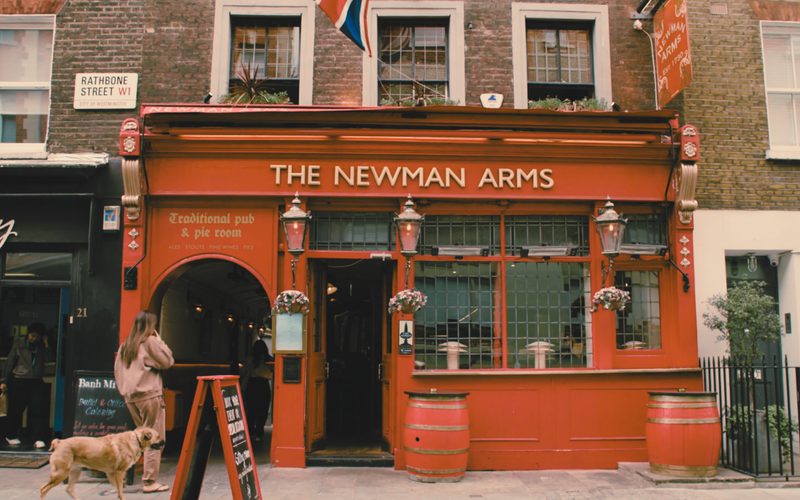
Filming Fitzrovia
What role has Fitzrovia played in cinema? In celebration of the BFI London Film Festival turning 70, we're looking at how Fitzrovia has served as setting and inspiration for films throughout the years.
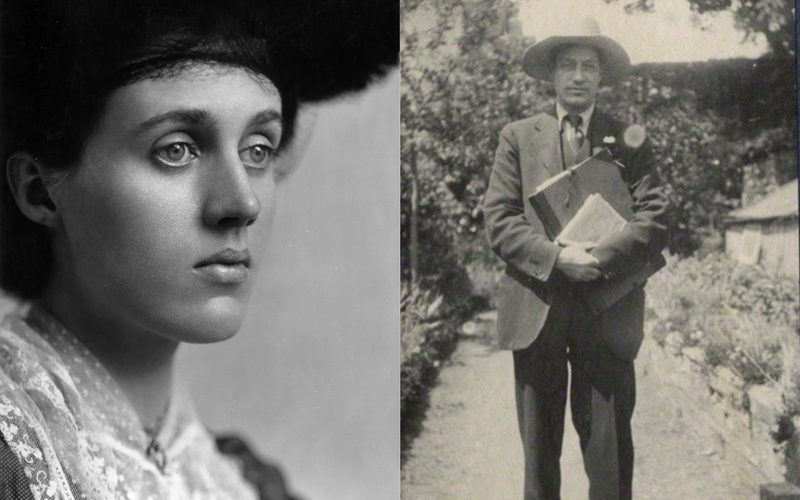
Vanessa Bell & Duncan Grant: Inside Fitzrovia
As the major exhibition 'Vanessa Bell & Duncan Grant: Inside Bloomsbury' opens this week at Tate Britain, we reflect on how Fitzrovia was central to the artists' creative practice.
Welcome to Fitzrovia
Where open minds create
Sign up to our newsletter
We'll send you regular updates about what's happening in Fitzrovia, what we're up to, and how you can get involved.